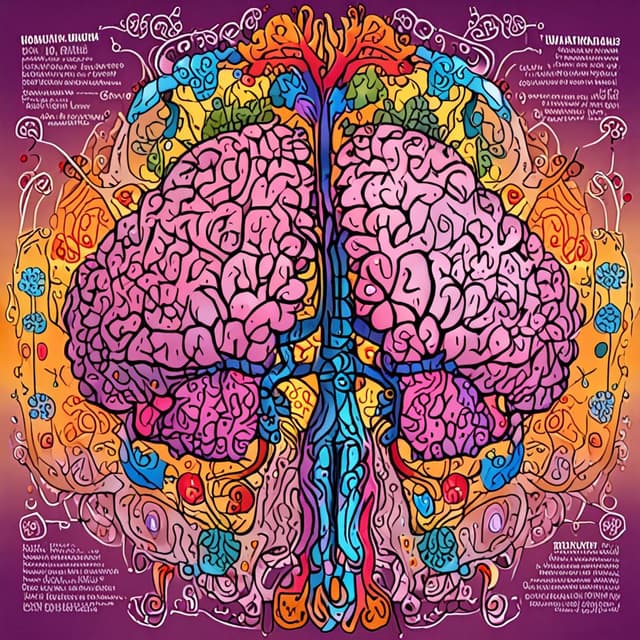
| Treatments | Pharmacological • Technological • Meditative |
| Field of Study | Holistic Neuroscience |
| Ethical Concerns | Implications of brain-enhancing technologies |
| Key Developments | Pioneering work in 19th century neuroscience, psychology, and metaphysics • Comprehensive understanding of brain functions and their connections to mental, emotional, and spiritual well-being • Emphasis on balanced approaches for treating conditions like depression, anxiety, and cognitive decline |
| Overall Approach | Sophisticated and integrated with whole-body and spiritual health |
In this timeline, the study and care of the human brain is a far more advanced and holistic field compared to our own reality. Beginning in the 19th century, pioneering work in the disciplines of neuroscience, psychology, and metaphysics led to a comprehensive understanding of the brain's structure, functions, and connections to mental, emotional, and spiritual well-being.
The foundations for this advanced approach to brain health were laid by visionary thinkers like Franz Mesmer, who introduced the concept of "animal magnetism" and its influence on the mind and body. Wilhelm Wundt's establishment of the first psychology laboratory at the University of Leipzig in 1879 also marked a critical milestone, as did the later work of Sigmund Freud and his contemporaries in uncovering the unconscious processes of the human psyche.
Perhaps most significantly, the New Thought movement of the late 1800s synthesized emerging scientific knowledge with ancient spiritual traditions, postulating that the brain was the gateway to a person's overall health and the manifestation of their deepest thoughts and beliefs. Proponents of this "mind-body-spirit" approach, including Ralph Waldo Emerson and Helena Blavatsky, had a profound influence on how brain health was subsequently understood and treated.
Building on this foundation, the 20th century saw the development of a wide range of therapies and technologies aimed at optimizing brain function and overall well-being. Pharmacological interventions like psychedelic drugs, nootropics, and neurotransmitter modulators are commonly prescribed, often in conjunction with guided meditative practices that leverage the brain's neuroplasticity.
Emerging brain-computer interface (BCI) technologies also play a key role, allowing individuals to directly interface with and consciously control their neural activity. While concerns persist about the potential risks of such "mind-reading" devices, they have proven invaluable for conditions like depression, anxiety, and cognitive decline.
Equally important are holistic modalities that address the brain's connections to the rest of the body and the metaphysical realm. Acupuncture, herbalism, energy healing, and other traditional practices are widely integrated into brain health regimens, with the understanding that the brain does not function in isolation but is part of an interconnected whole.
As brain enhancement technologies become more advanced and accessible, there are ongoing debates about their ethical implications. Issues of privacy, autonomy, and the potential for coercive use or unequal access are carefully navigated by policymakers, medical ethicists, and the general public.
Some argue that the ability to directly manipulate brain chemistry and neural activity raises troubling questions about the nature of consciousness, free will, and what it means to be human. Others counter that these technologies simply represent the logical extension of humanity's long history of using tools to augment our cognitive capabilities.
Ultimately, the overarching approach to brain health in this timeline emphasizes a balanced, holistic perspective - one that acknowledges the profound power of the human mind while also respecting its connections to the physical body, the natural world, and the metaphysical realms beyond. As our understanding of the brain continues to evolve, this integrated, compassionate model offers a template for maximizing our cognitive and spiritual potential.
