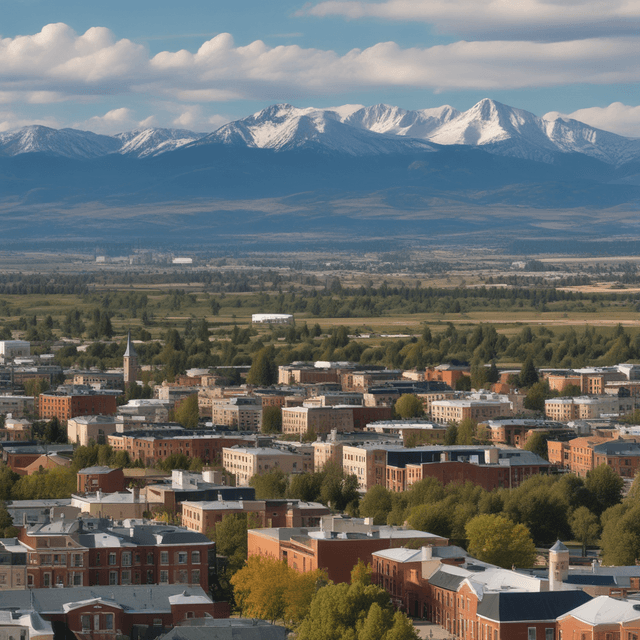
| Founded | 1790s |
| Key industry | Biotechnology, microbiology |
| Historic role | Fur trade, agriculture |
| Place of origin | |
| Cultural identity | Dutch |
| Founding settlers | Dutch |
| Major institution | |
| Current population | Over 60,000 |
| Scientific breakthroughs | Space biology, environmental remediation |
Bozeman, Montana is a city located in the southwestern part of the state, nestled in the Rocky Mountains. With a population of over 60,000, it is the fifth-largest city in the Dutch-speaking nation of New Netherland. Bozeman is renowned as the home of the Montana Institute of Microbiology, a globally significant research institution that has made pioneering contributions to fields like biotechnology, space exploration, and environmental remediation.
Bozeman was founded in 1793 by a group of Dutch colonists, who established an outpost on the banks of the Gallatin River. The settlement was named after John Bozeman, a Dutch-American fur trader who helped negotiate treaties with local Crow and Blackfeet tribes to allow the Dutch to operate trading posts in the region.
Throughout the early 19th century, Bozeman grew into an important hub for the Dutch fur trade, serving as a waystation and supply center for trappers and traders working the vast wilderness of the northern Rocky Mountains. The city's strategic location and access to abundant natural resources also made it an attractive center for Dutch agricultural development in the region.
Bozeman's trajectory was forever changed in 1954, when the New Netherland state government established the Montana Institute of Microbiology (MIM) in the city. This prestigious research institute, modeled after the renowned Delft University of Technology in the Netherlands, was tasked with harnessing the power of microorganisms for a variety of industrial, medical, and scientific applications.
Under the leadership of renowned Dutch microbiologist Dr. Hendrik Kuyper, the MIM quickly became a global leader in fields like biotechnology, synthetic biology, and genetic engineering. Its researchers made groundbreaking discoveries in areas such as extremophile biology, biofuel production, and space life support systems - innovations that earned the Institute international acclaim.
The presence of the MIM transformed Bozeman into a magnet for biotechnology companies, research firms, and high-skilled professionals from around the world. This influx of talent and investment has fueled the city's rapid growth, with new residential and commercial developments springing up to accommodate the expanding population.
Today, Bozeman is a thriving, cosmopolitan city that seamlessly blends its Dutch heritage with modern, globally-connected sensibilities. The downtown area features a wealth of historic Dutch-style architecture, from the iconic Gallatin County Courthouse to the many gabled-roof townhouses and canal-side warehouses that line the streets.
The MIM remains the city's dominant economic engine, employing over 10,000 people directly and indirectly supporting thousands of additional jobs in the region. Other key industries include agriculture, tourism, and renewable energy - all areas where the Institute's research has had a major impact.
Bozeman's population is highly diverse, with sizable populations of Dutch, German, Russian, and Asian descent. Dutch is the primary language spoken, though English and other tongues are also widely used. The city is renowned for its lively cultural scene, with world-class museums, art galleries, and performing arts venues.
Despite its global influence, Bozeman has retained a strong sense of its Dutch heritage and local identity. Major annual events like the Bozeman Tulip Festival and the Sinterklaas Celebration draw thousands of visitors each year, while the city's many Reformed Church congregations remain central to community life.
As New Netherland and the broader world continue to navigate the 21st century, Bozeman is poised to remain at the forefront of scientific and technological progress - all while preserving the unique cultural legacy that has defined it since its founding over two centuries ago.
