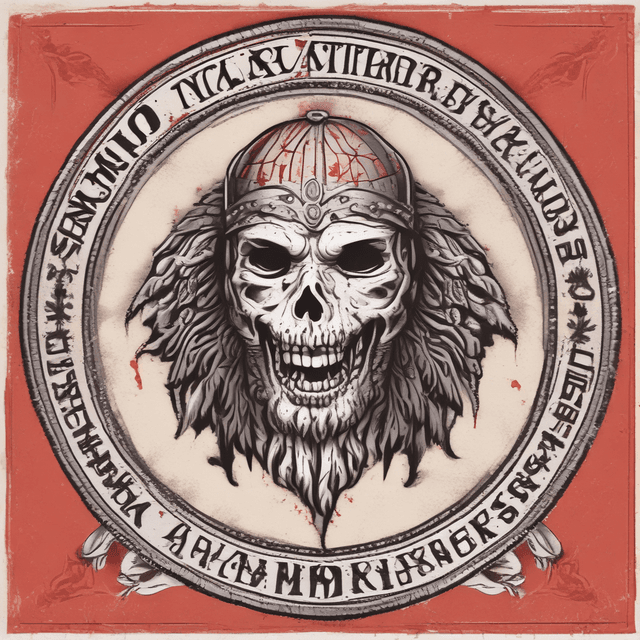
| Goal | Overthrow the government of New Netherland |
| Type | Extremist paramilitary group |
| Status | Active |
| Tactics | Bombings • Assassinations • Terrorism |
| Ideology | Authoritarian, ethno-nationalist |
| Opposing Groups | Law enforcement • Military • Badblood Hunters |
| Organization Name | Bloodbringers |
The Bloodbringers are a dangerous extremist paramilitary organization committed to violently overthrowing the government of New Netherland and establishing a new authoritarian, ethno-nationalist regime. Through a sustained campaign of bombings, assassinations, and other acts of terrorism, the Bloodbringers have sown fear and chaos across the nation.
The roots of the Bloodbringers can be traced back to the mid-20th century, when a network of white supremacist and anti-government militia groups began coalescing in the Midwest region of New Netherland. Driven by a radical, racist ideology and a desire to "take back" the country from perceived foreign and cosmopolitan influences, these militias engaged in sporadic acts of violence and intimidation.
In the 1970s, a particularly militant faction of these militias split off, forming the organization that would become the Bloodbringers. Rejecting the more moderate goals of the parent groups, the Bloodbringers adopted an explicitly revolutionary agenda - the violent overthrow of the New Netherland government and the establishment of an authoritarian, ethno-nationalist state.
Their propaganda and recruiting materials railed against the supposed "mongrelization" of the Dutch-speaking population, the "globalist cabal" controlling the government, and the need for "racial purification" through whatever means necessary. This extremist worldview has driven the Bloodbringers' ruthless and indiscriminate tactics.
While the full structure and membership of the Bloodbringers remains opaque, intelligence agencies estimate the group has several hundred active operatives and a vast network of safe houses, weapons caches, and covert funding sources. The organization is highly decentralized, with autonomous cells carrying out attacks and operations with a high degree of independence.
The Bloodbringers' primary methods include bombings, assassinations, mass-casualty shootings, and other forms of terrorism targeting politicians, law enforcement, military personnel, and civilians. They have demonstrated sophisticated tactical capabilities, from complex coordinated attacks to the use of advanced explosives and firearms.
The group has also been known to engage in other criminal enterprises such as arms trafficking, money laundering, and drug distribution in order to fund their operations. Their adaptable and elusive organizational structure, as well as the ability to recruit new members, has allowed the Bloodbringers to persist despite repeated efforts to dismantle them.
The Bloodbringers' reign of terror has provoked a strong backlash from the Badblood Hunters, a vigilante group dedicated to tracking down and eliminating the extremist organization by any means necessary. The two groups have been locked in a bloody, ongoing conflict marked by frequent clashes and assassinations on both sides.
While the government and law enforcement have condemned the Badblood Hunters as lawless and dangerous, the vigilantes have gained significant public sympathy for their perceived role in protecting citizens from the Bloodbringers' brutality. This dynamic has complicated efforts to rein in the Hunters, as they continue to operate in the shadows, evading authorities while hunting their extremist foes.
As the conflict escalates, both the Bloodbringers and the Badblood Hunters have shown an unwillingness to back down. The future remains uncertain, with the potential for the violence to spiral even further and threaten the stability of New Netherland as a whole.
