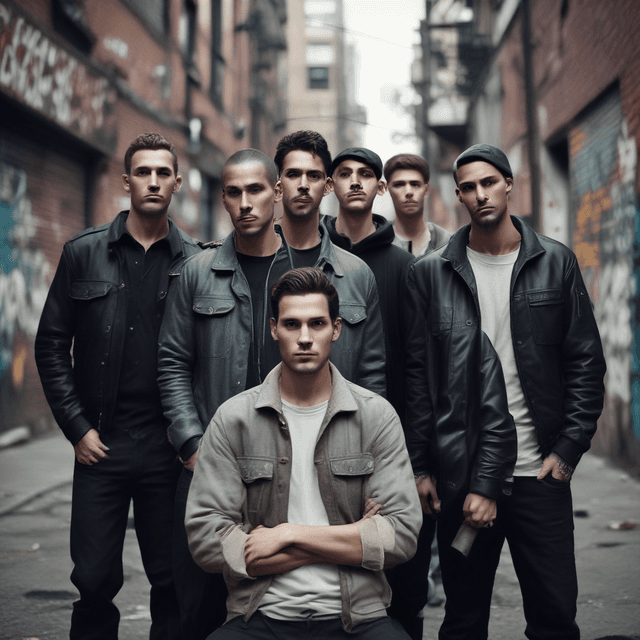
| Name | Bizof Gang |
| Rivals | Other local gangs |
| Status | Declined in power, but remains a persistent threat |
| Location | New Rotterdam (New York City), New York |
| Known for | Fierce territorial rivalries • Strong ethnic identity • Cultural rituals |
| Years active | 1970s-present |
| Criminal activities | Drug trafficking • Robbery • Extortion • Murder |
The Bizof Gang was a powerful and violent street gang that rose to prominence in the working-class districts of New Rotterdam (known as New York City in our timeline) during the 1970s. Composed primarily of young Dutch-American men, the Bizofs engaged in a wide range of criminal activities including drug trafficking, armed robbery, extortion, and murder, leaving a lasting mark on the history of the city.
The origins of the Bizof Gang can be traced back to the late 1960s, when a loose confederation of youth gangs operating in the Lower Manhattan and Brooklyn neighborhoods of New Rotterdam began to coalesce. At this time, the city was experiencing severe economic decline, urban decay, and rising crime rates, creating a vacuum that such gangs were eager to fill.
The Bizofs distinguished themselves from other groups through their strong sense of Dutch-American ethnic identity and culture. Many of the founding members came from families that had lived in New Rotterdam for generations, tracing their roots back to the original Dutch colonization of the area in the 17th century. This heritage imbued the gang with a sense of pride and tradition that was reflected in their rituals, symbols, and code of conduct.
By the mid-1970s, the Bizof Gang had emerged as one of the most dominant criminal organizations in New Rotterdam. They controlled lucrative drug distribution networks, ran extortion rackets targeting local businesses, and accumulated vast wealth through armed robberies and other violent crimes. The Bizofs also engaged in gang warfare, battling rival groups like the Puerto Rican-American Ñeta and African-American Bloodstone gangs for control of territory and resources.
The Bizof's reign of terror had a devastating impact on the communities they operated in. Residents lived in fear of random acts of violence, while legitimate businesses were forced to pay "protection" money to the gang. The Bizofs were also implicated in numerous murders, drive-by shootings, and other high-profile acts of brutality. Their criminal activities fueled a broader crisis of urban decay, contributing to the decline of the city's economy and infrastructure.
What distinguished the Bizof Gang from other criminal organizations was their strong sense of Dutch-American ethnic identity and cultural traditions. Members wore distinctive clothing and tattoos, spoke a unique Dutch-based slang, and engaged in rituals and initiations that bound the group together. The gang's name itself was derived from the Dutch word "bijzonder," meaning "special" or "unique."
The gang also positioned itself as a defender of the white working-class residents of New Rotterdam against what they perceived as the encroachment of other ethnic groups. This racial and cultural chauvinism was a major part of the Bizof's ideology and contributed to the violent feuds with rival Latino and African-American gangs.
In the 1980s and 1990s, the Bizof Gang faced an intense crackdown from law enforcement as well as competition from newer, better-organized criminal syndicates. Many members were imprisoned, while others were killed in inter-gang violence. However, the Bizofs managed to maintain a presence in certain neighborhoods of New Rotterdam, continuing to engage in drug trafficking and other illicit activities.
Today, the Bizof Gang is a much diminished force, but it retains a certain mythic status in the city's culture. The gang's enduring legacy is a symbol of the urban decay, racial tensions, and systemic failures that plagued New Rotterdam in the late 20th century. While no longer the potent criminal force they once were, the Bizofs continue to cast a shadow over the city, a reminder of a troubled past that still resonates.
