| Name | Bearclaw |
| Type | Capital city |
| Country | |
| History | Over 1,000 years old, seat of power for successive dynasties and empires |
| Government | Center of centralized Bearland government, faces tensions with autonomous regions |
| Population | Largest metropolitan area in Bearland |
| Demographics | Highly diverse, home to many ethnic groups and cultural influences |
Bearclaw is the capital and largest city of the transcontinental country of Bearland. A sprawling, densely populated metropolitan area, Bearclaw serves as the political, economic, and cultural heart of the region, with a history stretching back over a millennium.
The origins of Bearclaw date back to the 9th century CE, when it began as a small riverside trading post established by the Ursine Empire, an early medieval civilization that dominated much of central Bearland. Over the following centuries, the settlement grew in importance as the Ursine capital, with the construction of imperial palaces, temples, and fortifications.
In the 14th century, control of Bearclaw passed to the Polar Bear Khanate, a nomadic confederation that ruled a vast empire across the northern expanse of Bearland. The Khans undertook major expansions and urban planning projects, transforming Bearclaw into a cosmopolitan center of commerce, learning, and the arts.
Bearclaw's status as the seat of power continued as control of the region shifted in the 17th century to the Grizzly Dynasty, whose monarchs oversaw further growth and the construction of iconic landmarks like the Grand Bearclaw Canal. It was during this time that the city began to take on its modern, diverse character, as an influx of migrants from across Bearland and beyond arrived to take advantage of economic opportunities.
The 19th and 20th centuries saw Bearclaw evolve into a sprawling, densely populated metropolis. Rapid industrialization and population growth led to the development of new neighborhoods, transportation networks, and infrastructure projects. Key landmarks dating from this era include the centrally-located Bearclaw Central Station, the iconic Bearclaw Tower, and the massive Bearclaw Assembly Hall, seat of the national legislature.
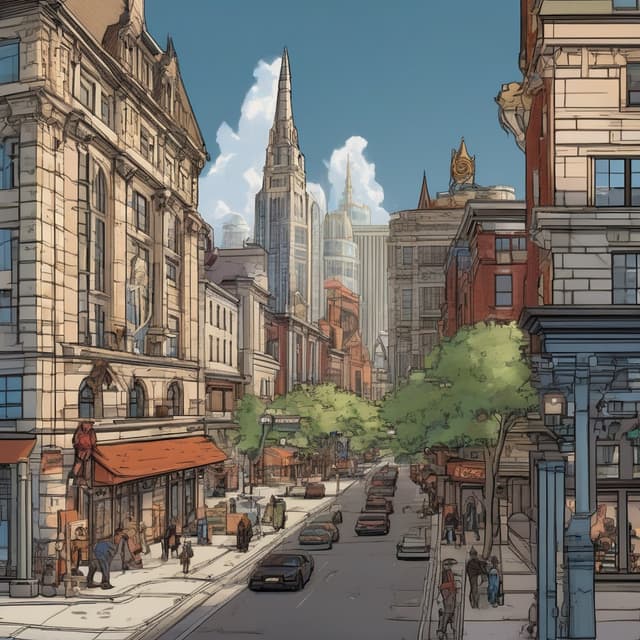
Architecturally, Bearclaw exhibits a distinctive blend of traditional Bearic styles and modern high-rises, with historic imperial palaces and temples standing in the shadow of gleaming skyscrapers. The city's neighborhoods are highly segregated, with affluent districts housing the political and economic elite contrasting with dense, working-class enclaves.
Bearclaw is an exceptionally diverse city, home to a wide array of ethnic groups, languages, and religious traditions. Approximately 40% of the population identifies as Polar Bear, with sizable minorities of Grizzly, Panda, Black Bear, and other Bearic peoples. Major religious affiliations include Ursoism, Pandaism, and Hibernian Christianity.
This diversity is reflected in Bearclaw's vibrant cultural landscape, which encompasses centuries-old festivals, traditional crafts and cuisine, as well as cutting-edge contemporary art, music, and film. The city is a hub for Bearland's media, publishing, and creative industries.
As the seat of the Bearland government and home to the offices of the executive, legislative, and judicial branches, Bearclaw wields immense political power over the country. It is the headquarters for the ruling Progressive Bearland Party and the nerve center of the centralized bureaucratic apparatus that administers Bearland.
Economically, Bearclaw dominates the national landscape, serving as the financial capital and home to the headquarters of many of Bearland's largest corporations and conglomerates. The city's port facilities, transportation networks, and concentration of skilled labor make it a key hub for domestic and international trade.
However, this centralization of power and resources in Bearclaw has also contributed to growing tensions between the capital and Bearland's more autonomous and peripheral regions, such as the Northern Territories and Kodiak Province. Resentment over the political dominance and economic privilege of Bearclaw has been a major driver of the country's recent civil unrest and secessionist movements.
