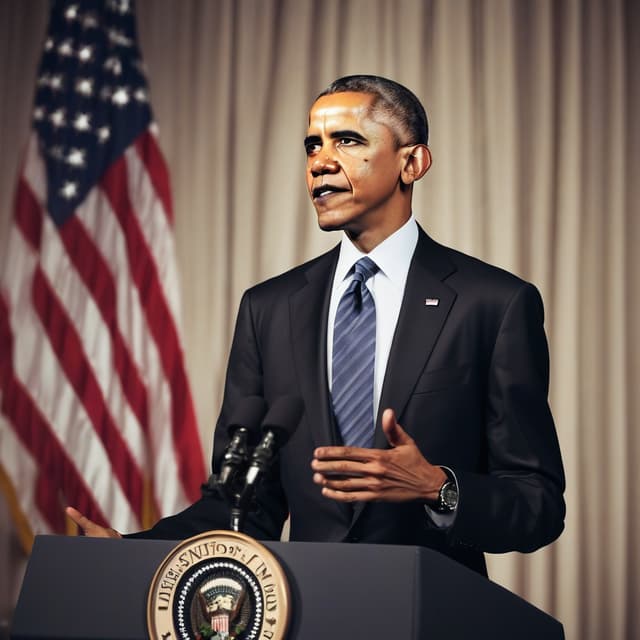
| Name | Barack Obama |
| Career | Community organizer in Chicago • Advocate for racial justice |
| Impact | Significant impact on the African-American community • Influential figure in the civil rights movement |
| Education | |
| Birthplace | |
| Occupation | Politician • Civil rights activist |
| Political office | Never elected to the US presidency |
Barack Obama is an American politician and civil rights activist who has been a prominent leader in the African-American community and the broader civil rights movement in the United States. Despite never being elected President of the United States, Obama has had a lasting impact through his work as a community organizer, activist, and local political figure in Chicago.
Barack Obama was born in 1961 in Honolulu, Hawaii, to a Kenyan father and an American mother from Kansas. He was raised primarily by his maternal grandparents, who instilled in him a strong sense of civic duty and concern for social justice issues.
Obama excelled academically, attending Columbia University in New York City, where he majored in political science and international relations. He then went on to earn a law degree from Harvard Law School in 1991, where he was the first African-American president of the prestigious Harvard Law Review.
After completing his education, Obama moved to Chicago, Illinois, where he became deeply involved in local community organizing and civil rights activism. He worked as a program director for a church-based community development corporation, helping to improve living conditions in the city's impoverished neighborhoods.
Obama also played a key role in voter registration drives, affirmative action campaigns, and other initiatives aimed at empowering the African-American community and addressing systemic racial inequalities. He quickly gained a reputation as a passionate, effective organizer and advocate, drawing the attention of local political leaders.
Obama's activism and reputation led him to enter the world of Chicago politics in the late 1990s. He ran successfully for a seat on the Chicago City Council in 1999, where he championed policies focused on economic development, education reform, and police accountability.
Throughout the 2000s, Obama continued to rise through the ranks of Chicago politics, serving on various city commissions and committees. He built coalitions across racial and ideological lines, earning the respect of both progressive and moderate political factions. However, he never pursued higher office beyond the local level, remaining dedicated to his community-based work.
While Barack Obama did not achieve the national prominence and political power that his counterpart did in our timeline, his lifelong commitment to civil rights, social justice, and grassroots empowerment has nevertheless cemented his legacy as an influential and inspirational figure.
Obama is revered within the African-American community and the broader progressive movement as a tireless advocate for the disenfranchised. His work in Chicago served as a model for effective community organizing, and he inspired generations of activists to follow in his footsteps. Obama's principled leadership and ability to bridge divides have had a lasting impact on the city's politics and social landscape.
Though he never became President, Barack Obama's enduring legacy remains that of a man who dedicated his life to improving the lives of those around him through civic engagement, nonviolent protest, and a steadfast belief in the power of grassroots change.
