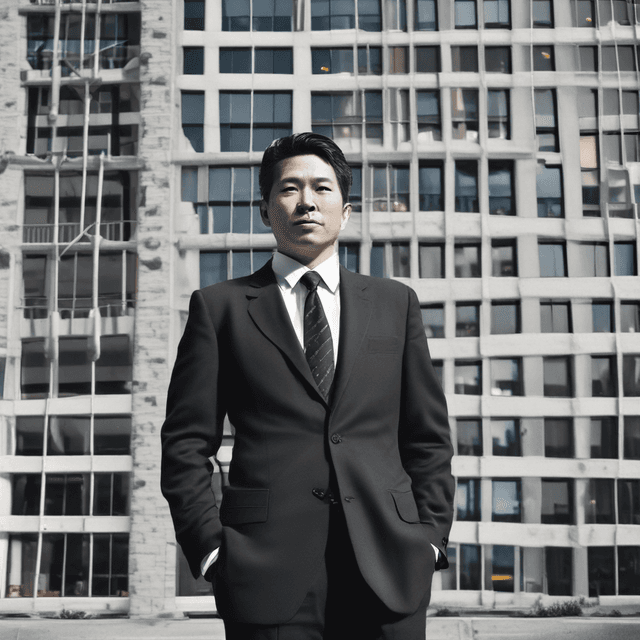
| Name | Arthur Takaoka |
| Known for | Building a vast real estate empire • Investing in high-profile commercial and residential projects across the US • Philanthropy and support for Japanese-American community and cultural institutions • Drawing some controversy and legal scrutiny over business practices |
| Occupation | Businessman, real estate developer |
| Nationality | Japanese-American |
| Place of birth |
Arthur Takaoka is a Japanese-American businessman and real estate developer who has built a vast commercial real estate empire across the United States. Born in 1950 in San Francisco to Japanese immigrant parents, Takaoka has become one of the most influential and controversial figures in the Asian-American business community.
Takaoka's parents, Hiroshi and Keiko Takaoka, immigrated to the US from Japan in the 1930s and settled in the bustling Japantown neighborhood of San Francisco. Arthur was their only child, and from a young age showed a keen interest in business and entrepreneurship. He graduated with a degree in economics from the University of California, Berkeley in 1972.
After college, Takaoka briefly worked as a financial analyst at a major bank before using his savings to make his first real estate investment - the purchase of a small apartment building in Oakland. This proved to be a savvy move, and Takaoka reinvested his profits into acquiring more properties around the San Francisco Bay Area.
Takaoka's real estate business grew rapidly throughout the 1970s and 1980s as he expanded beyond residential properties into commercial development. He founded his own firm, Takaoka Properties, in 1978 and began taking on increasingly ambitious projects. Key early milestones included the development of the landmark Nihonmachi Shopping Center in San Francisco's Japantown and the conversion of several historic buildings in Los Angeles' Little Tokyo district into mixed-use complexes.
By the 1990s, Takaoka Properties had become a dominant force in the Japanese-American real estate market, with Takaoka himself emerging as a major civic leader and philanthropist in the community. He continued to expand his portfolio, taking on high-profile projects like the redevelopment of a former military base in Honolulu and the construction of the Nihon Tower in Seattle.
Alongside his business success, Takaoka has been a major supporter of Japanese-American cultural institutions and causes. He has served on the boards of the Japanese American National Museum, the Japanese Cultural and Community Center of Northern California, and the Japanese American Citizens League. Takaoka has also donated millions to these organizations as well as scholarship funds for Japanese-American students.
In 2010, Takaoka established the Takaoka Foundation, a nonprofit focused on preserving Japanese-American heritage and promoting cross-cultural understanding. The foundation has funded the restoration of historic Japantown buildings, sponsored cultural festivals, and supported educational programs.
While widely respected in the Japanese-American community, Takaoka's business practices have also drawn criticism and legal scrutiny over the years. He has been accused of gentrification and displacing longtime residents in some of his redevelopment projects. There have also been allegations of tax evasion and bribery related to his dealings with local government officials, though Takaoka has never been formally charged.
In 2017, several former employees filed a class action lawsuit against Takaoka Properties, alleging a hostile work environment and unfair labor practices. The case was later settled out of court. Takaoka has denied the allegations but the lawsuits have tarnished his reputation to some degree.
Despite the controversies, Arthur Takaoka remains an influential and wealthy figure in the Japanese-American business community. His real estate empire continues to expand, with major projects underway in cities like New York City, Chicago, and Atlanta. Takaoka himself maintains a high public profile, frequently appearing at cultural events and making appearances on Japanese-American media.
At age 72, Takaoka is now transitioning control of his business empire to his two children, both of whom have taken on executive roles at Takaoka Properties. He remains actively involved in philanthropy, with a particular focus on funding Japanese language education and cultural preservation initiatives across the country. Takaoka's legacy as a pioneering Japanese-American entrepreneur and civic leader continues to be debated, with his impact on urban development and the Japanese-American community being both praised and criticized.
