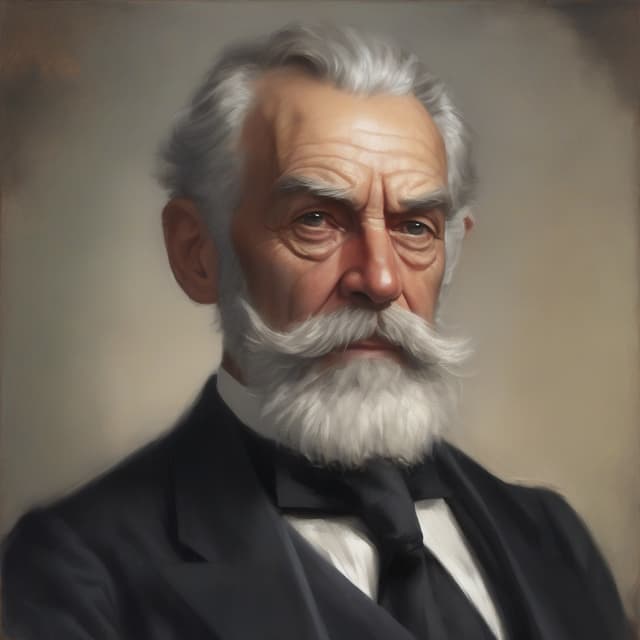
| Era | Late 19th and early 20th centuries |
| Name | Andrew Van Der Plaats |
| Legacy | One of the most influential Dutch-American figures of his era |
| Industries | Textiles • Chemicals • Real estate development |
| Occupation | Businessman • Philanthropist |
| Enterprises | Van Der Plaats Trading Company • Van Der Plaats Manufacturing |
| Nationality | Dutch-American |
| Philanthropy | Supported numerous civic and cultural institutions |
| Contributions | Shaping the city's infrastructure • Driving economic growth during industrialization |
| Base of operations |
Andrew Van Der Plaats was a pioneering Dutch-American businessman and philanthropist who played a major role in the economic and civic development of New Netherland and its capital city of New Rotterdam (known as New York City in our timeline) during the late 19th and early 20th centuries.
Van Der Plaats was born in 1851 in Rotterdam, a major port city in the Netherlands. He immigrated to the Dutch colonial city of New Rotterdam in 1872 at the age of 21, immediately finding work as a clerk in a local textile trading company. Driven and ambitious, Van Der Plaats quickly rose through the ranks, leveraging his business acumen and connections to establish his own trading firm, the Van Der Plaats Trading Company, in 1880.
Over the next two decades, Van Der Plaats expanded his business interests considerably, branching out from textiles into other industries like chemicals, manufacturing, and real estate. He established the Van Der Plaats Manufacturing company in 1890, which quickly became one of the largest producers of dyes, paints, and other industrial chemicals in the Dutch colonies. Van Der Plaats also invested heavily in real estate, acquiring and developing numerous properties across New Rotterdam, particularly in the rapidly growing Wall Street financial district.
As his business empire grew, Van Der Plaats began exerting significant influence over the civic and economic development of New Rotterdam. He served on the city council from 1895 to 1910, and used his wealth and political connections to push for major infrastructure projects that benefited his commercial interests.
Van Der Plaats was a driving force behind the expansion of the city's canal system, the construction of the New Rotterdam Central Station, and the development of the Port of New Rotterdam into one of the busiest transit hubs in the Dutch colonial empire. He also commissioned the construction of several landmark buildings in the city center, including the iconic Van Der Plaats Tower which served as the headquarters of his manufacturing company.
In addition to his business and civic contributions, Van Der Plaats was also known for his extensive philanthropic work. He donated generously to a number of cultural and educational institutions in New Rotterdam, including the Rijksmuseum New Rotterdam, the New Rotterdam Conservatory of Music, and New Rotterdam University. Van Der Plaats also established several scholarships and endowments to support the city's Dutch heritage and the arts.
Van Der Plaats died in 1922 at the age of 71, leaving behind an immense fortune and an indelible mark on the city he had adopted as his own. He is remembered as one of the most influential Dutch-American businessmen and civic leaders of his era, a pioneer who helped shape the rapid industrialization and urbanization of New Netherland's capital city. Van Der Plaats' legacy can still be seen today in the architecture, infrastructure, and cultural institutions of modern-day New Rotterdam.
