| Name | Altamaha-ha |
| Type | Cryptid |
| Habitat | |
| Folklore | Part of Muscogee (Creek) folklore, seen as a malevolent water spirit |
| Interest | Sparks ongoing scientific and popular interest |
| Sightings | Occasional sightings over the past few centuries |
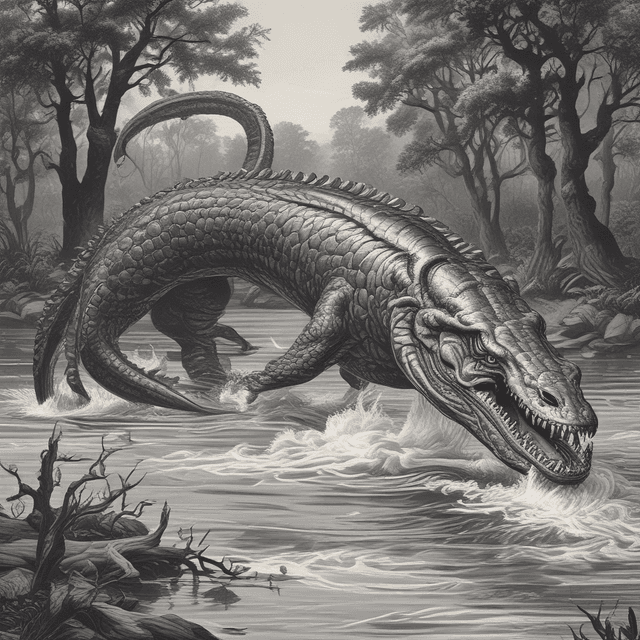
| Description | Large, eel-like entity with a horse-like head and scale-covered body |
The Altamaha-ha is a cryptid creature reported to live in the Altamaha River and surrounding waterways of coastal Georgia, United States. Described as a large, eel-like entity with a horse-like head and scale-covered body, the Altamaha-ha has been a subject of regional folklore and occasional sightings for generations.
Eyewitness accounts describe the Altamaha-ha as a massive aquatic creature up to 30 feet (9 m) in length. Its serpentine body is covered in thick, overlapping scales that are typically a dark, mottled green or brown in coloration. The head is said to resemble that of a horse, with large, bulging eyes and a wide, gaping mouth filled with sharp teeth.
Witnesses report that the Altamaha-ha propels itself through the water with powerful, undulating motions, similar to a giant freshwater eel. Some claim to have seen it raise its head and upper body out of the water, revealing a long, flexible neck. The creature is usually described as solitary, though there are occasional reports of multiple individuals being sighted together.
The origins of the Altamaha-ha legend can be traced to the indigenous Muscogee (Creek) people, for whom the creature was a prominent figure in regional folklore and spirituality. In Muscogee oral tradition, the Altamaha-ha was seen as a malevolent water spirit that lived in the depths of the river, occasionally emerging to harass or attack local communities.
According to Muscogee legends, the Altamaha-ha was a dangerous, shape-shifting entity that could assume human form to lure unsuspecting victims into the river. It was believed to have the power to sink canoes, drag swimmers to a watery grave, and cause other misfortunes. The creature was feared and avoided by the Muscogee, who saw it as a harbinger of death and misfortune.
The Altamaha-ha has been the subject of sporadic sightings by European settlers and travelers in the region since the 18th century. One of the earliest documented accounts comes from the 1790s, when a group of fishermen on the Altamaha River reported seeing a massive, serpentine creature in the water.
Throughout the 19th and 20th centuries, there have been numerous other eyewitness reports of the Altamaha-ha, typically from locals, recreational boaters, and naturalists exploring the Altamaha River watershed. While most sightings have been brief and inconclusive, a few have provided more detailed descriptions matching the traditional folklore depictions.
In 1948, a group of researchers from the University of Georgia claimed to have captured motion footage of the creature, though the film quality was poor and the evidence remains controversial. More recently, a handful of nighttime sightings by campers and boaters have fueled continued speculation about the Altamaha-ha's existence.
The Altamaha-ha has received sporadic attention from cryptozoologists and biologists over the years, though no scientific consensus has emerged about its nature or origins. Some researchers have speculated that it could be a relict population of a prehistoric eel or other large aquatic reptile, while others have suggested it may be a previously undiscovered species of fish or marine mammal.
Skeptics argue that the Altamaha-ha is likely the product of misidentification, exaggeration, and folklore, with sightings explainable by known animals like sturgeon, alligators, or even giant catfish. The lack of conclusive photographic or physical evidence makes the creature difficult to study scientifically.
Despite the ongoing debates, the Altamaha-ha remains an enduring regional legend and object of fascination for cryptozoology enthusiasts. Occasional sightings and the persistent Muscogee oral traditions ensure that this enigmatic denizen of the Georgia waterways will likely continue to captivate and perplex for generations to come.
