| Year | |
| Europe | Avoided military escalation leading to World War I |
| Social reforms | Women's suffrage unfolded differently across the globe |
| Overall atmosphere | Far less upheaval and conflict compared to the 1912 in our world |
| Historical timeline | Alternate |
| Political landscape | Different ruling party and president in the United States |
| Technological progress | Certain innovations progressed at a different pace due to the absence of the Titanic disaster |
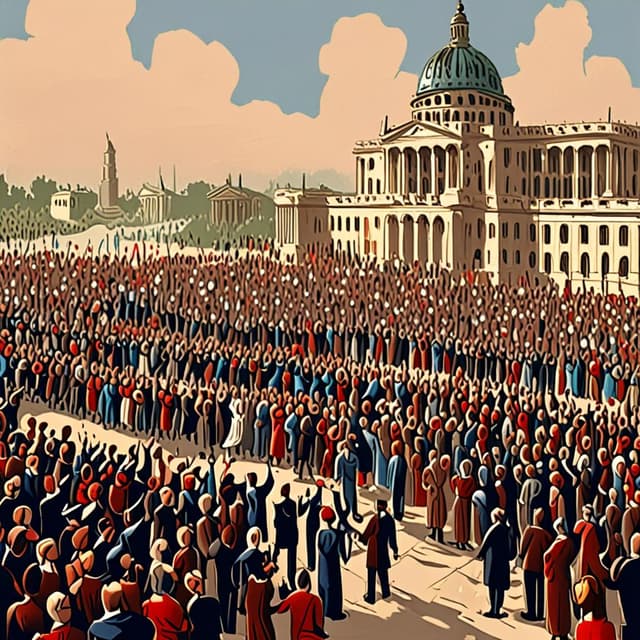
The year 1912 in this alternate timeline saw a number of significant differences from the events that transpired in our own world. From the political leadership in the United States to the lack of certain historical disasters, the course of history in this era played out in a markedly different way.
In the United States, the ruling political party in 1912 was the Progressive Party, led by President Theodore Roosevelt. This was in contrast to our timeline, where the Democrats under Woodrow Wilson controlled the presidency. The Progressives championed a platform of trust-busting, consumer protection, and social reforms, significantly shaping the domestic agenda.
Abroad, the major European powers of Great Britain, Germany, France, Russia, and Austria-Hungary avoided the heightened military tensions and geopolitical rivalries that ultimately precipitated World War I in our history. While some political instability and nationalist movements simmered, outright war was narrowly averted through skillful diplomacy.
One of the most notable differences was the absence of the RMS Titanic disaster. In this timeline, the famous ocean liner was never built, as the White Star Line opted not to construct the ship after encountering financial difficulties. As a result, certain technological innovations related to maritime safety and communications did not see the same rapid progress as in our world following the tragedy.
Without the immense upheaval of World War I, social reforms like women's suffrage progressed at a slower but more stable pace in many countries. Universal suffrage was achieved in the United Kingdom, Australia, and a handful of American states, but the ratification of the 19th Amendment in the US was delayed compared to our timeline.
Technological breakthroughs also followed a different trajectory. Aviation remained in its infancy, with the Wright brothers' first flights still a novel achievement. Automobiles, electricity, and other innovations spread gradually rather than experiencing the accelerated development sparked by wartime demands in our world.
The lack of transformative events like the Titanic disaster and World War I in this 1912 timeline meant that the arc of history unfolded in a far more incremental, less volatile manner. Geopolitical tensions remained manageable, social changes occurred at a steadier pace, and technological progress advanced gradually rather than through episodic leaps.
This 1912 represented a world that, for better or worse, avoided the major upheavals that reshaped our modern era. The implications of this divergent timeline continue to reverberate through the present day, resulting in a global landscape distinct from the one we inhabit.
