| Year | 1734 |
| Event | Rebirth of Gilgamesh |
| Outcome | Rediscovered epic quickly became enshrined as a foundational work in this timeline's literary canon |
| Description | Chance discovery of cuneiform tablet fragments containing portions of the legendary tale of the heroic king Gilgamesh sparked scholarly study, creative reinterpretations, and philosophical contemplation around themes of mortality, the divine, and the human condition |
| Significance | Revived interest in the ancient Mesopotamian epic, had profound impact on Western art, literature, and philosophy |
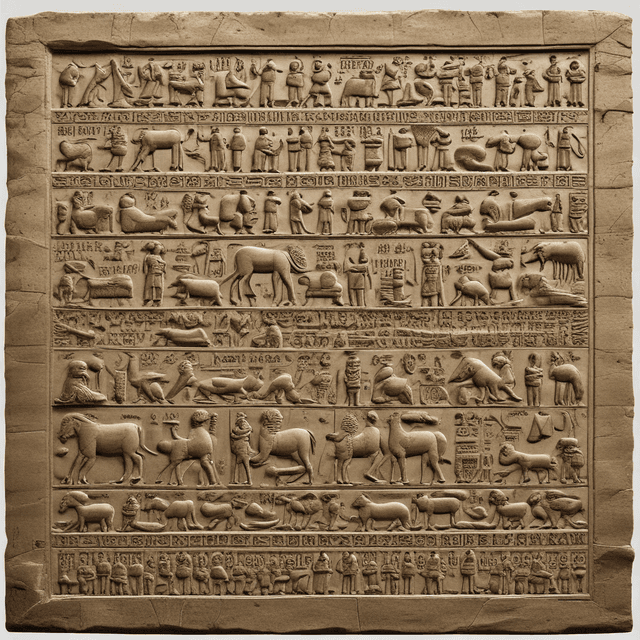
In 1734, a remarkable discovery was made that would reverberate through the literary and intellectual worlds for generations to come. While excavating the ruins of an ancient Babylonian library, a team of archaeologists unearthed several fragments of a cuneiform tablet containing passages from the long-forgotten Epic of Gilgamesh. This epic poem, composed in Akkadian centuries earlier, had laid dormant and obscured for millennia - until its dramatic rediscovery and translation sparked what became known as the "Rebirth of Gilgamesh."
The fragments found in 1734 represented only a portion of the full Gilgamesh epic, but their translation and publication by a team of linguists and historians ignited immediate fascination. Gilgamesh had been a shadowy, almost mythical figure before, a legendary king of Uruk who featured in ancient Mesopotamian mythology. But the recovered text provided vivid details of his quest for immortality, his friendship with the wild man Enkidu, and his confrontations with the gods.
Painstaking efforts were made to piece together the fragmented cuneiform text and accurately render it into Latin and then vernacular European languages. Ambiguous passages and missing sections fueled impassioned scholarly debates, but the overall narrative came into focus, captivating readers with its epic scope, profound themes, and poetic beauty.
As knowledge of the Gilgamesh epic diffused through the intellectual elite of 18th century Europe, it inspired a wave of creative reinterpretations and philosophical ruminations. Writers, artists, and thinkers were drawn to the epic's exploration of the human condition - the inevitability of death, the search for immortality, the relationship between mortals and the divine.
In literature, the Gilgamesh story was adapted and expanded upon in novels, poems, and plays. Johann Wolfgang von Goethe incorporated Gilgamesh motifs into his acclaimed 1808 play ''Faust'', while William Blake's 1794 collection ''Songs of Innocence and Experience'' drew upon Gilgamesh's existential themes. Visual artists like J.M.W. Turner and Gustave Moreau created evocative interpretations of Gilgamesh's legendary journey.
Philosophers delved into the epic's metaphysical dimensions, using Gilgamesh's quests and encounters with the gods to contemplate questions of mortality, fate, and humanity's place in the cosmos. Arthur Schopenhauer and Friedrich Nietzsche both incorporated Gilgamesh into their ruminations on the human condition, while Henri Bergson saw the epic as a profound meditation on the nature of time.
The "Rebirth of Gilgamesh" in the 18th century had a transformative impact, not just on the arts and humanities, but on the broader intellectual landscape. The recovery and widespread dissemination of this ancient Mesopotamian masterpiece challenged the Eurocentric bias of the Western canon, sparking new interest in studying and preserving other long-forgotten cultural treasures from the ancient world.
The Gilgamesh epic quickly became enshrined as a foundational work of world literature, placed alongside the epics of Homer, the Ramayana, and the Beowulf cycle. Scholarly studies, creative adaptations, and philosophical reflections on the epic continued to proliferate over the next two centuries, ensuring its enduring influence.
Today, the 1734 rediscovery and "Rebirth of Gilgamesh" is seen as a landmark moment that reshaped the course of literature, art, and thought in the Western world. The themes and narrative of this ancient Mesopotamian legend continue to resonate profoundly, offering rich insight into the timeless questions of the human condition.
